

Light industrial building onsite

Incredible temporary space.

Perfect for workshops.
Light industrial building onsite
farm equipment storage buildings
Flexible Storage Solutions for Farming, Distribution and Agribusiness Operations Across New Zealand
Agricultural Distribution Facilities
At NZ Temporary Structures, we provide modular farm equipment storage buildings designed for New Zealand’s evolving rural, horticulture and agribusiness sectors.
Our structures deliver fast, adaptable and weather-resistant covered space for:
-
Machinery and vehicle storage
-
Crop handling and packing operations
-
Feed and hay protection
-
Agricultural distribution facilities
-
Greenhouse support infrastructure
-
Covered loading and logistics areas
-
Seasonal operational expansion
From regional farming operations to large-scale agribusiness and distribution networks, NZTS structures help businesses create practical covered space without the delays associated with conventional construction.
What Are Farm Equipment Storage Buildings?
Farm equipment storage buildings are modular structures designed to protect machinery, products and operational areas from harsh environmental conditions while improving day-to-day efficiency.
These buildings are commonly used for:
-
Tractor and harvester storage
-
Machinery sheds
-
Packing and grading facilities
-
Crop and produce storage
-
Feed and processing covers
-
Maintenance workshops
-
Covered dispatch and loading zones
-
Rural logistics and handling facilities
NZTS structures can be configured as temporary, semi-permanent or long-term building solutions depending on operational requirements.
Horticulture and Produce Handling
Why Are Modular Farm Buildings Well Suited to New Zealand Operations?
Farming and agribusiness operators across New Zealand often need infrastructure that can adapt quickly to changing seasonal and operational demands.
Modular structures provide several advantages over traditional construction, including:
-
Faster installation timeframes
-
Reduced site disruption
-
Expandable layouts
-
Large clear-span interiors
-
Relocatable building systems
-
Cost-effective covered space solutions
This flexibility allows operators to increase storage and operational capacity quickly while maintaining ongoing site productivity.
How Are These Structures Used in Horticulture and Produce Handling?
Horticulture businesses frequently use modular structures for:
-
Produce packing areas
-
Crop storage
-
Greenhouse support spaces
-
Weather-protected dispatch zones
-
Irrigation and equipment storage
-
Seasonal overflow capacity
Large covered work areas help growers improve workflow efficiency and protect produce during harvesting, sorting and distribution.
Can These Buildings Support Livestock and Feed Operations?
Yes. NZTS structures are suitable for a wide range of rural support applications including:
-
Feed storage
-
Hay and grain protection
-
Processing covers
-
Machinery and equipment shelters
-
Maintenance and servicing areas
-
Covered operational workspaces
Insulated roof and wall systems can also be incorporated where temperature management or condensation reduction is important.
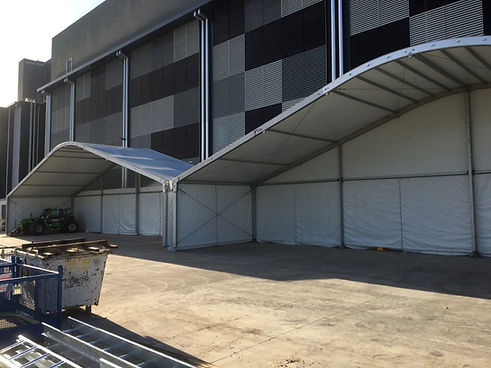
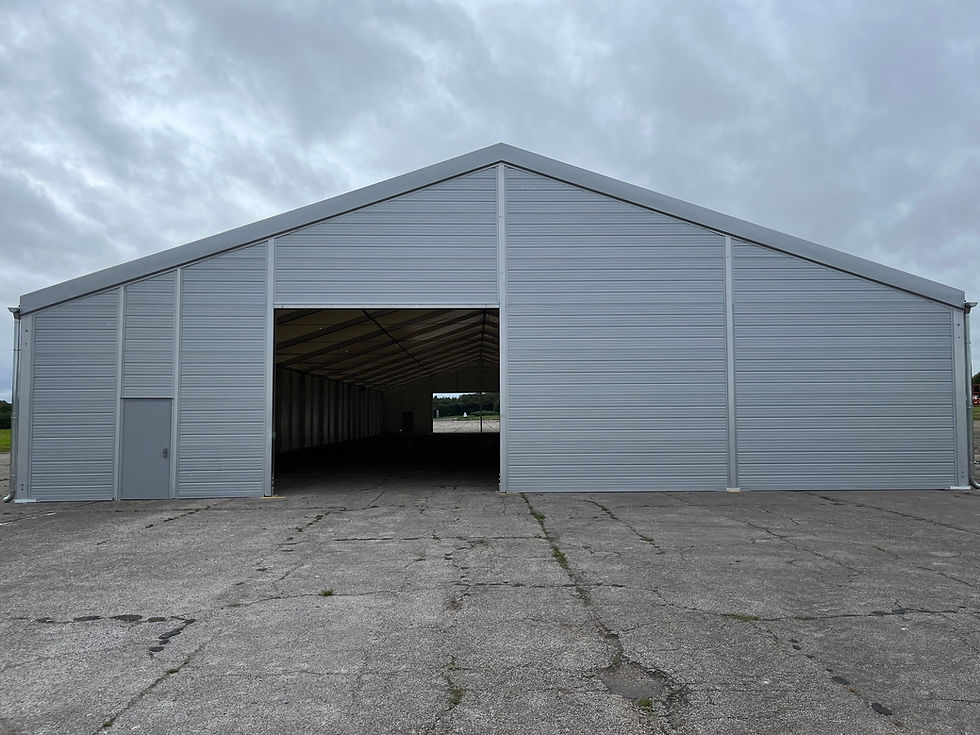
Cargo Structure
The Ultimate Lightweight Industrial Building Solution
For businesses seeking versatile, durable, and cost-effective Farm Equipment Storage buildings, the Cargo Structure is the ideal choice. Designed for warehousing, logistics, transport, waste management, and industrial estates, these lightweight industrial structures offer high durability, rapid installation, and maximum flexibility to meet evolving business needs.
-
Fast Installation: Pre-manufactured in a factory and installed on-site within weeks, minimising downtime.
-
Customisable & Scalable: Available with insulated or non-insulated options, custom layouts, and various wall and roofing configurations.
-
Robust Construction: Engineered with steel and aluminium frames, designed to accommodate large vehicles, heavy machinery, and high-traffic industrial use.
-
Weather-Resistant & Durable: Built to endure New Zealand’s toughest environmental conditions, meeting strict national and international building codes.
-
Sustainable & Relocatable: Modular design allows for easy expansion, repurposing, and relocation, reducing waste and providing long-term cost savings.
With clear span widths of 5m to 30m and side heights up to 6.3m, the Cargo Structure offers large, uninterrupted interior spaces, making it an excellent lightweight industrial building for storage, manufacturing, and logistics operations.
Whether you need a temporary warehouse, an extended production facility, or a secure equipment shelter, NZTS provides scalable solutions tailored to your industry’s demands.

Projects: Light Industrial Warehouses


Absolutely. Modular structures are increasingly used throughout agricultural distribution and agribusiness sectors where scalable infrastructure is required.
Applications include:
-
Distribution hubs
-
Produce handling facilities
-
Temporary warehousing
-
Rural logistics operations
-
Seasonal dispatch expansion
Clear-span layouts provide efficient movement for forklifts, trucks and machinery without internal columns restricting operations.
Which NZTS Structure System Is Best for Farm Equipment Storage Buildings?
Cargo Structure System
The NZTS Cargo Structure system is designed for demanding rural and industrial environments requiring:
-
Large-span covered space
-
High machinery clearance
-
Weather protection
-
Rapid installation
-
Flexible operational layouts
Cargo structures can include:
-
Roller doors
-
Steel sheet walling
-
Insulated wall systems
-
Ventilation options
-
Personnel access doors
-
Heavy-duty flooring integration
These structures are engineered to perform in challenging operating conditions while remaining adaptable for future expansion.
Can Farm Equipment Storage Buildings Be Insulated?
Yes. NZTS can provide insulated structures using:
-
Thermo roof systems
-
Insulated sandwich wall panels
-
Ventilation and climate management solutions
Insulated buildings can help:
-
Reduce internal heat build-up
-
Improve operational comfort
-
Protect machinery and products
-
Minimise condensation
-
Support processing and storage activities
Are NZTS Structures Suitable for Agricultural Distribution and Agribusiness Facilities?
Who Uses Farm Equipment Storage Buildings?
Our modular structures are suitable for:
-
Growers
-
Farming cooperatives
-
Livestock operations
-
Agricultural distribution providers
-
Agribusiness facilities
-
Equipment dealerships
-
Rural contractors
-
Produce handling businesses
NZTS structures support both short-term operational demands and long-term infrastructure planning.
Your Trusted Partner in Agri Buildings
Get In Touch Today
NZ Temporary Structures delivers high-quality modular building solutions across New Zealand, backed by advanced European-engineered structural systems and extensive experience across industrial and rural sectors.
Find out how NZTS can help your business with farm equipment storage buildings.
FAQs
Common Questions
What are farm equipment storage buildings used for?
They are commonly used for machinery storage, produce handling, feed protection, logistics operations and covered workspaces.
Can these structures accommodate large farming equipment?
Yes. Clear-span layouts provide unrestricted internal space for tractors, harvesters, trailers and operational vehicles.
Are these buildings suitable for agricultural distribution facilities?
Yes. NZTS structures are widely used for produce handling, dispatch and rural logistics applications.
Can insulated options be included?
Yes. Insulated roof and wall systems are available depending on operational requirements.
Can the structures be expanded in the future?
Yes. Many modular structures can be extended, relocated or reconfigured as operational needs change.


